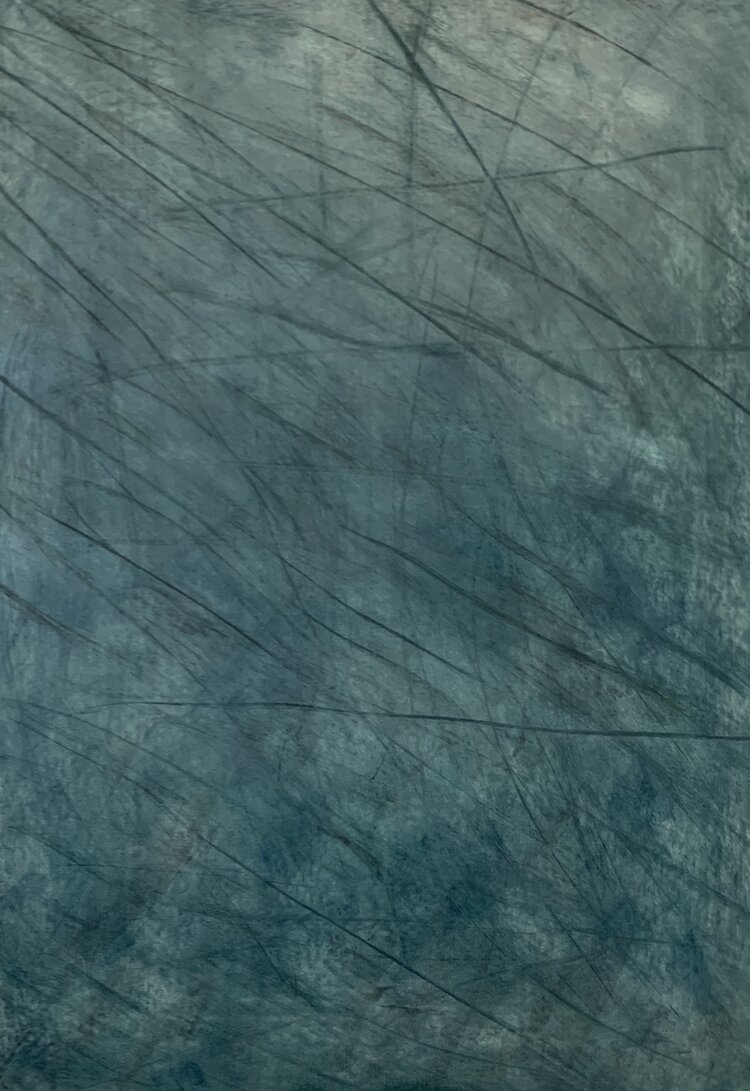
The Barrel Store, Corbans Estate Arts Centre, February 2022
This project explores the movement of water and matter across the surface of paper, silk, concrete, and organic material in response to differing concentrations of solutes. They form altered visual relationships and changing axes. The charcoal paintings are vertical, cartographic, observed from afar, and detached - while other surrounding work is experienced as ‘embodied’. Down the side of a water tank in the centre of the room, fabric is swathed vertically from the rafters. The fabric has been drawn through liquid and charcoal. By using soft silk for the charcoal drawings, these float in a fluid motion. Attached to the wall is a series of drawings on paper, printed from the surface of the water and stamped at intervals with the fading remains. Charcoal paint covers horizontal paper where dripping water floods the surface. The surfaces shift and the materials are active. Water is an actant in our world.
“The flow and flush of waters sustain our own bodies, but also connect them to other bodies, to other worlds beyond our human selves.”’ Astrida Neimanis - Bodies of Water: Posthuman Feminist Phenomenology. (p.2)
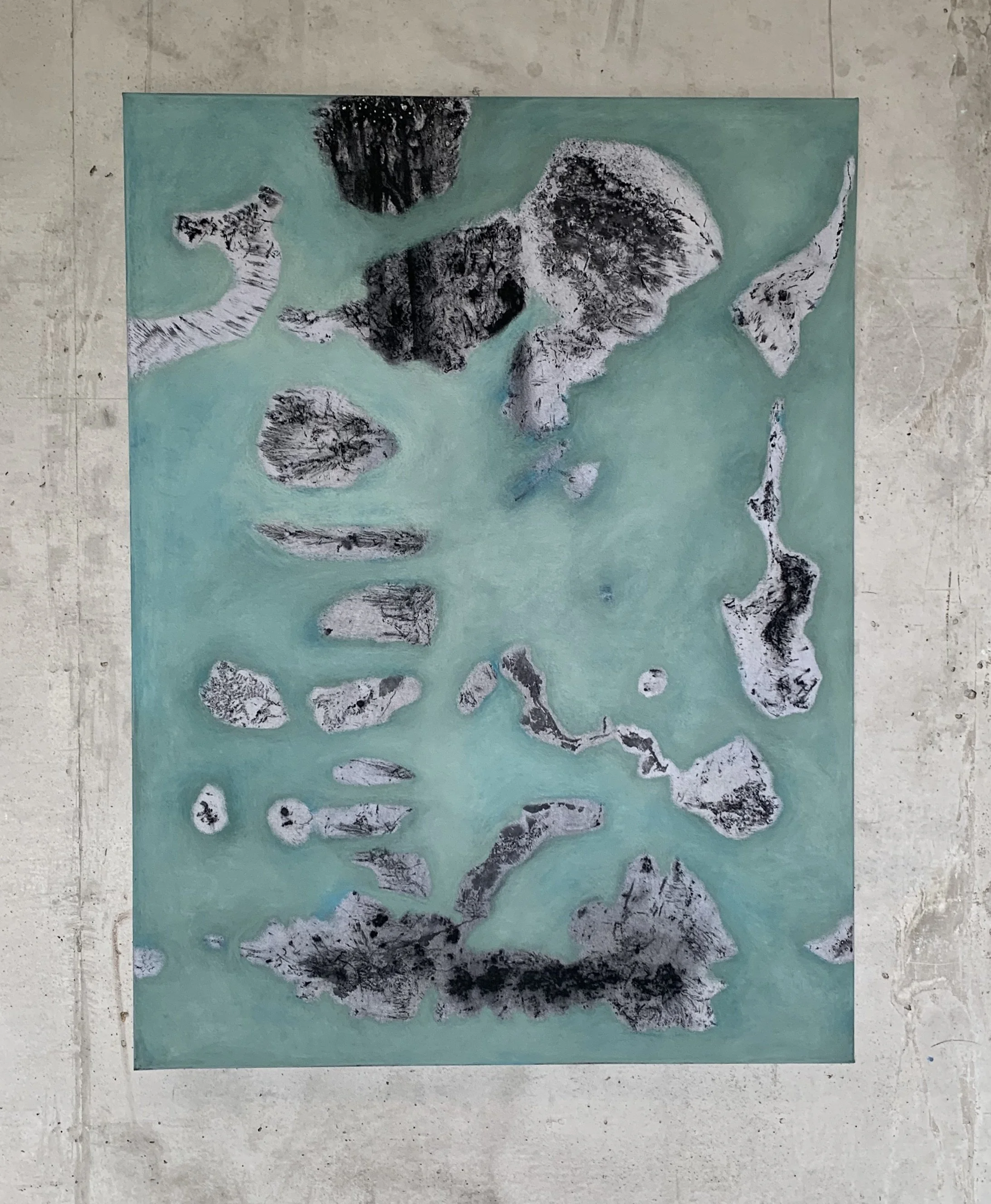
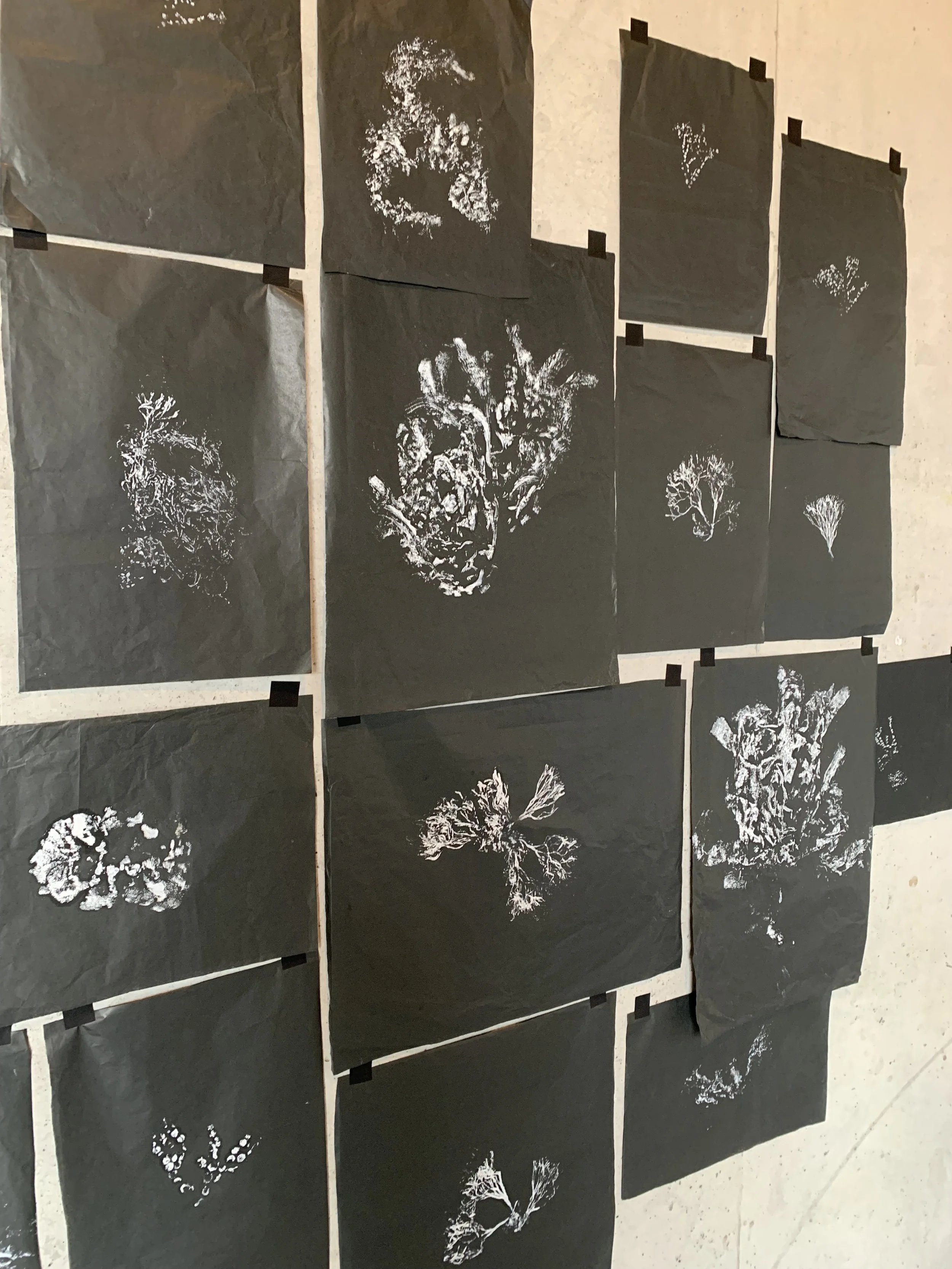
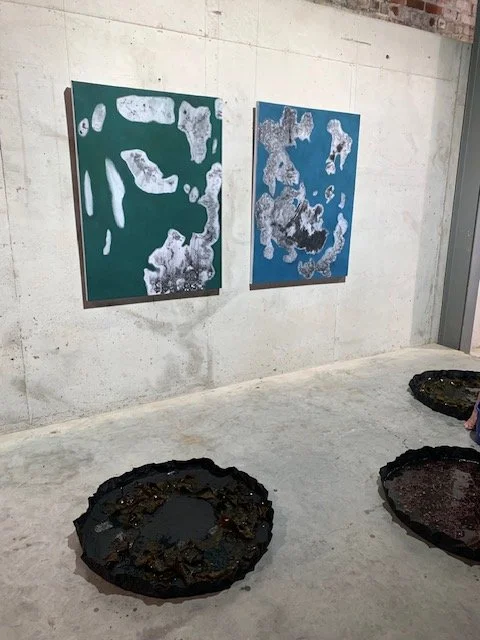
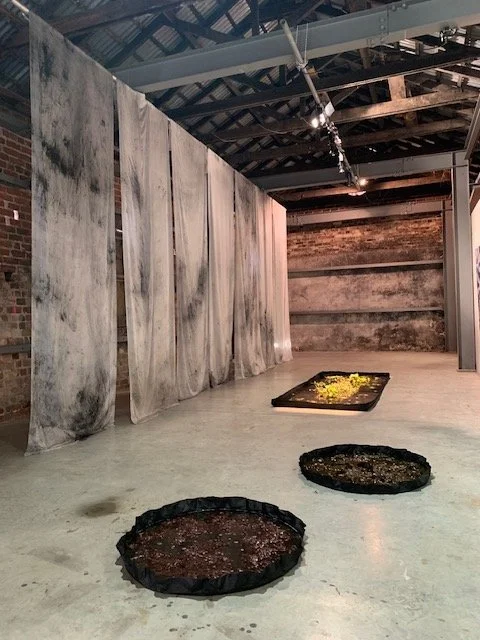
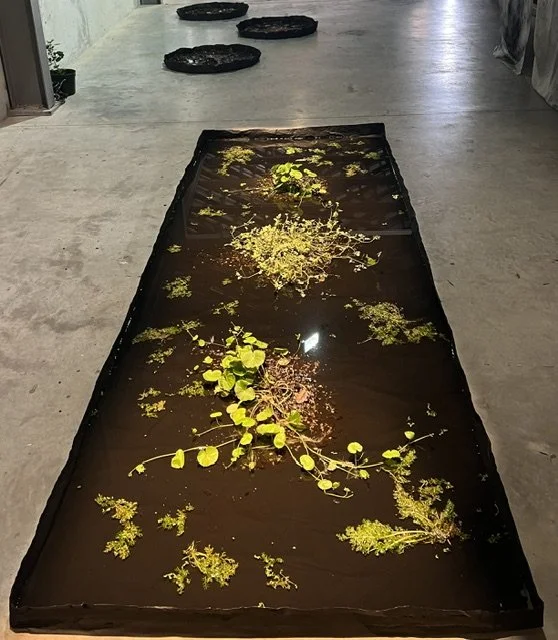
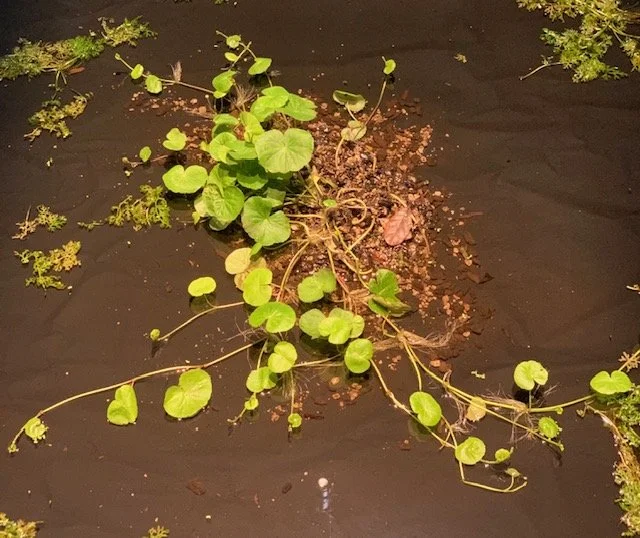
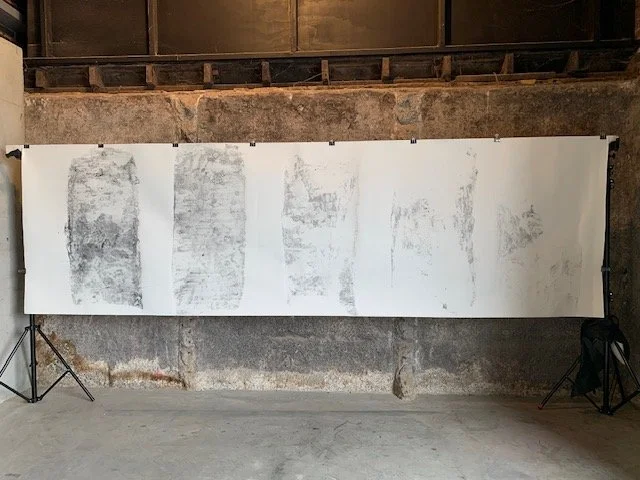
In this project at the Barrel Store (exhibited at the Corbans Estate Arts Centre in February 2022), Jill McIntosh mixed organic, fluid, and structural materials to explore how water and solutes interact with different surfaces. Water was combined (as an active medium/actant) with charcoal, and liquid solutions having differing concentrations of solutes and substrates such as soft silk (used for fluid charcoal drawings), paper (used for horizontal charcoal paintings and series of stamped drawings), and concrete. The exhibition intersects a central water tank, fabric swathed from the rafters, and tape (visible in the exhibition imagery holding up drawings on the wall.) This artistic process is exploratory, experimental, and centred on the active role of natural elements.
McIntosh positioned water not merely as a medium, but as an actant—a co-creator in the work. Water does not just sit there; it does things. It possesses a lively materiality that forces humans and environments to react to it. Water erodes cliffs, carves canyons, and dictates where ecosystems can thrive. We build dams, pipes, and canals to contain it, but water leaks, evaporates, rusts metal, and floods over barriers. It constantly asserts its own physical properties against human engineering. As seen in creative practices, water acts as a co-creator. When mixed with charcoal or ink, it flows, pools, and dries according to its own fluid dynamics, it transforms, dictating the final form of a painting rather than letting the artist have absolute control.
In the installation, McIntosh’s process can be broken down into several components:
1) The Detached/Cartographic: The charcoal paintings are hung vertically, designed to be observed from afar. They mimic a cartographic, top-down perspective that feels detached and analytical.
2) The Embodied: The surrounding installations—like the flowing silk and shifting textures—are designed to be experienced physically and phenomenologically by the viewer within the space.
Ultimately, this artistic process is guided by a posthuman philosophy (referencing theorist Astrida Neimanis), highlighting how the "flow and flush of waters" connects human bodies to the wider, non-human world. In posthumanist feminism, theorist Astrida Neimanis introduces the idea that we are all "bodies of water." By recognizing water as an actant, we realize that water moves through us. It blurs the boundary between the human "self" and the "outside" world. The water you drink was once part of a cloud, a river, or another organism, making it a connective tissue that facilitates global relationships. Shifting our perspective to see water as an actant changes how we approach global challenges. Astrida Neimanis, Bodies of Water: Posthuman Feminist Phenomenology.
This project considers environmental ethics. Instead of treating water merely as a commodity to be bought, sold, or managed, we begin to respect it as a dynamic participant in our world. It also considers climate change: floods, rising sea levels, and severe droughts are not just passive "weather events"—they are the powerful reactions of a non-human actant responding to global shifts, forcing human societies to adapt, migrate, or rebuild. It suggests that we shift our perspective to see water as an actant changes how we approach global challenges.